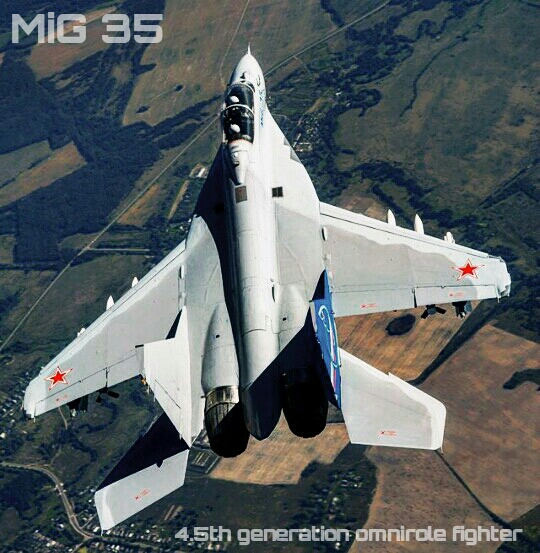
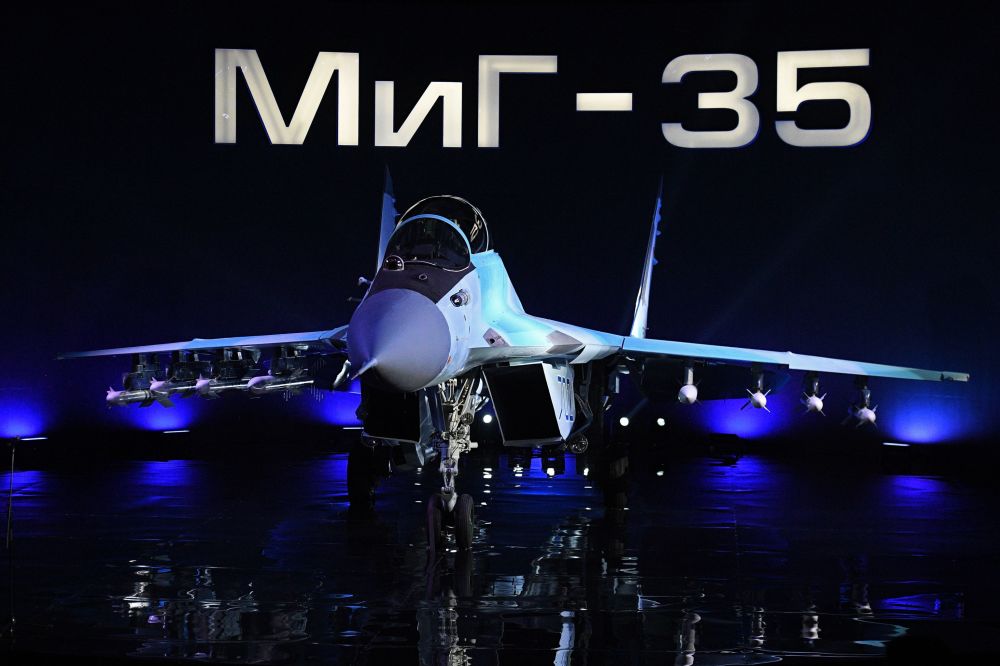
  The Mikoyan MiG-35 (NATO reporting name: Fulcrum-F) is a Russian fighter aircraft that is a further development of the MiG-29M/M2 and MiG-29K/KUB fighters. It is classified as a 4++ generation jet fighter by Mikoyan. The first prototype was a modification of the aircraft that previously served as MiG-29M2 model demonstrator. While the airframe is similar, the aircraft is practically a new design under the hood. Compared to the original Fulcrum, the MiG-35 adds a completely new fly-by- wire control system, a lighter airframe, more fuel capacity, more efficient engines and thrust-vectoring nozzles. The single seat version is designated MiG-35 and the two-seat version is MiG-35D The MiG-35/MiG-35D exhibits advancements on MiG-29K/KUB and MiG-29M/M2 fighters in combat efficiency enhancement, universality and operational characteristics improvement. The most important changes are the Phazotron Zhuk-AE active electronically scanned array (AESA) radar, the RD-33MK engines and the newly designed Optical Locator System, OLS-35. The final configuration of the MiG-35's on-board equipment has been left open intentionally using the MIL-STD-1553 bus. The main advantage of an open architecture configuration for its avionics is that future customers will have options to choose from components and systems made by French, Israeli, Russian and United States companies. The new AESA radar and the uniquely designed optical locator system (OLS) make the aircraft less dependent on ground-controlled interception (GCI) systems and enable the MiG-35 to conduct independent multi-role missions. 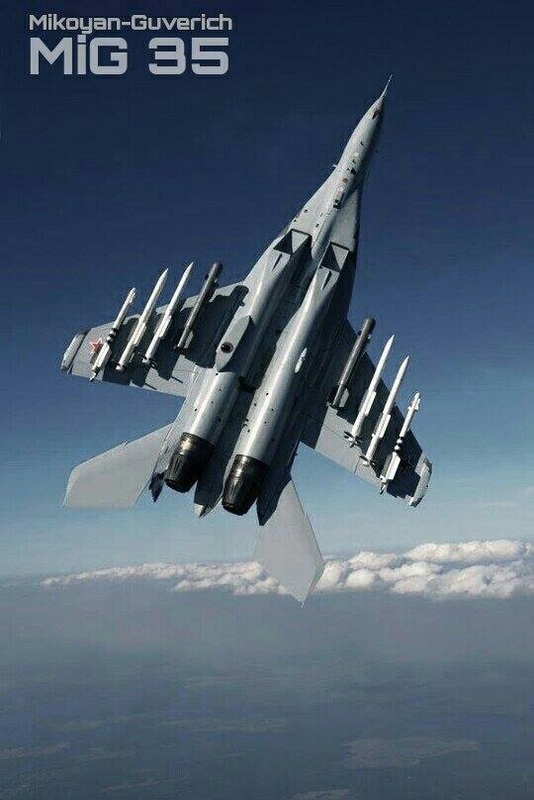 Mig-35 Power plant The RD-33MK "Morskaya Osa" was installed by the new modification. It is the latest version of the RD-33 and was intended to power the MiG-29K and MiG-29KUB. It has 7% more power compared to the baseline model due to the use of modern materials in the cooled blades, providing a higher thrust of 9,000 Kgf. In response to earlier criticism, the new engines are smokeless and include systems that reduce infrared and optical visibility. The engines may be fitted with vectored-thrust nozzles, which would result an increase in combat efficiency by 12% to 15%. RD-33OVT engine variant can be fitted with KliVT swivel-nozzles and a thrust vectoring control (TVC) system and can direct thrust in two directions or planes. As of 2012, the only in-service, in production fighter jet using this technology is Su-35. Other current thrust-vectoring aircraft, such as the Su-30MKI and the F-22, have nozzles that each vector in one plane. Klimov achieved all-aspect vectoring with the aid of three hydraulic actuators that deflect the nozzles, and are mounted at 120A° intervals around the engine nacelle. This enabled MiG-35 to fly at very low speeds without angle-of-attack limitations, and ensured that it will also remain controllable in zero-speed and 'negative-speed' (tail-forward) areas for sustained periods. The MiG-35's combination of TVC and advanced missile-warning sensors gives it the edge during combat. RD-33 engines are smokeless and include systems that reduce infrared and optical visibility. 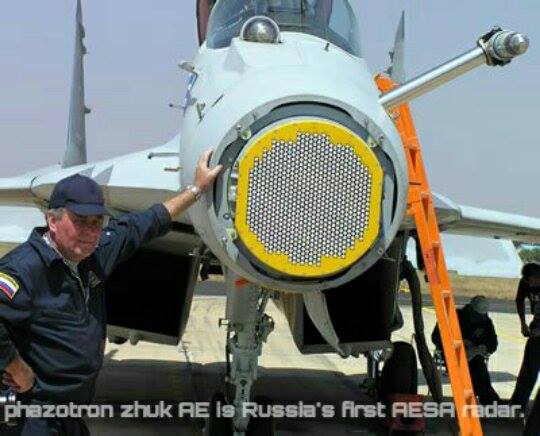 MIG-35 Sensors New modifications include the newly rolled-out Phazotron Zhuk-AE active electronically scanned array (AESA) radar. MiG-35 will be the first Russian aircraft to be fitted with active electronically scanned array radar. The Zhuk-MA's antenna consists of 160 modules, each with four receive-and-transmit modules. It is believed to offer a 160km (85nm) air target detection radius and 300km for surface ships. This AESA radar offers a wider range of operating frequencies, providing more resistance to electronic countermeasures (ECM), more detection range, and more air and ground targets detected, tracked and able to be engaged simultaneously. Like radar, OLS allows the MiG-35 to detect targets and aim weapon systems. But, unlike radar, OLS has no emissions, meaning it cannot be detected.OLS works like a human eye by getting the picture and later analyzing it. That operates in both visual and infrared wavelengths. NII PP, the federal space agency science and research institute's engineers have chosen more short-wave bands for the matrix, which has increased sensitivity of the complex several times and has increased detection range. The OLS on the MiG-35 is considered to help pilots to spot even the USAF's stealth planes. OLS includes a complex of powerful optics with IR vision that makes it impossible for any plane to hide. OLS solves the problem of blurred vision. At speed, each piece of dust can cause harm to the glass of the OLS.The new OLS uses leuco-sapphire, the next-hardest material after artificial diamonds, making the lifetime for such glass much longer. According to NII PP engineers, leuco-sapphire is clear for all the OLS emissions and doesn't corrupt the signal, an important factor for the optical systems. The MiG -35 will also incorporate a powerful electronic warfare suite—an area where the Russians excel. 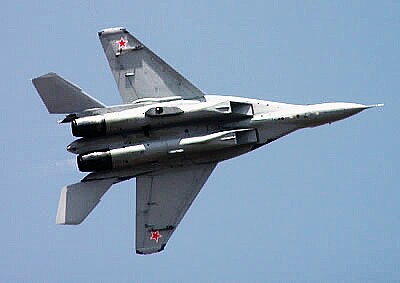 MIG-35 weapons The aircraft's suite of guided weapons includes Kh-31A anti-ship missiles with active radar seekers, the Kh-31P anti-radar missiles, Kh-29TE missiles and KAB-500Kr TV-guided bombs. Added, when equipped with an external optical / laser targeting pod, the fighter can use the Kh-29L air-to-surface missiles and KAB-500L laser guided bombs. These weapons will allow the aircraft to engage aerial and land targets. 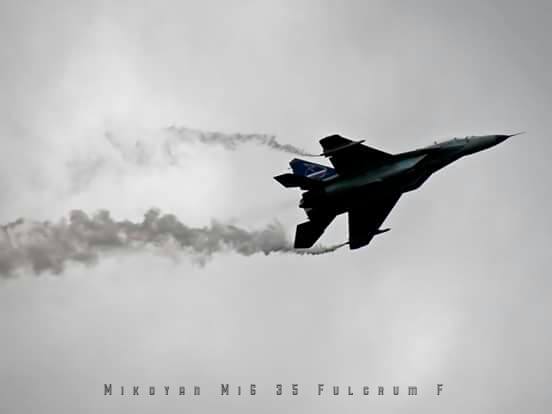 PERFORMANCE The MiG-35 can climb at the rate of 330m/s. Its maximum speed is 2,400km/h. The normal and ferry range of the aircraft are 2,000km and 3,100km respectively. The service ceiling is 17,500m. The aircraft weighs around 11,000kg and its maximum take-off weight is 29,700kg. 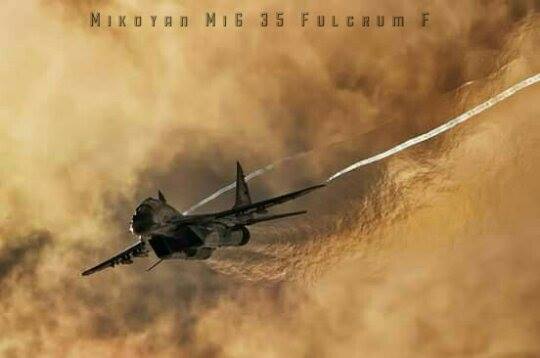 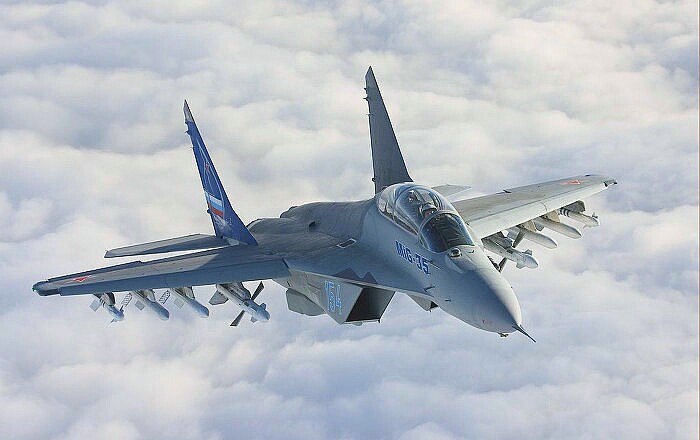 Mig - 37 should come with a single piece canopy like F - 16 / F - 22, that is without frame. Not only this but also with more speed, higher fuel efficiency, excellent jamming capacity and higher BVR hit capabilities with more range. It should hang on air constantly with mach 4+ speed.
Anuj Kumar nayak
10/21/2017 02:59:22 am
Can you tell me the details of propulsion system
#Marut_Admin
10/21/2017 11:37:28 pm
Their are two available options one is RD-33MK Morskaya Osa. Leave a Reply. |
AuthorPalash Choudhari Archives
June 2021
Categories
All
|
 RSS Feed
